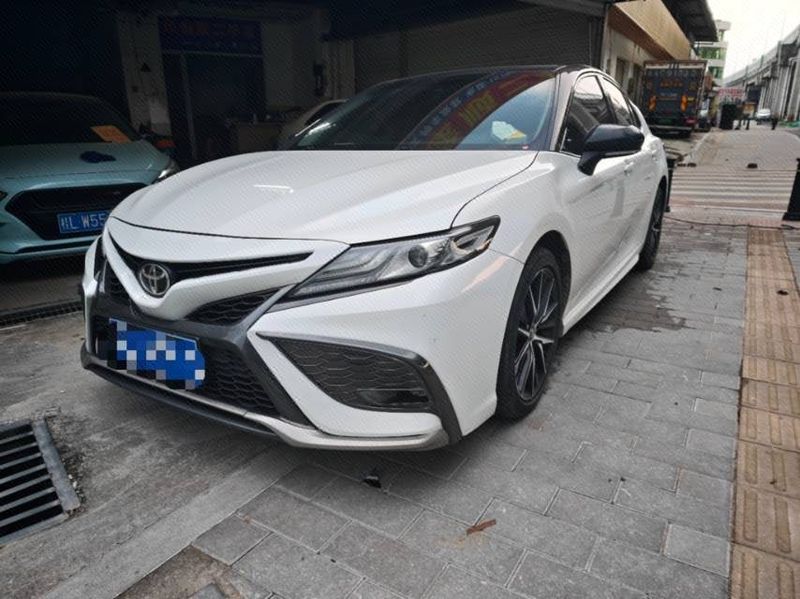
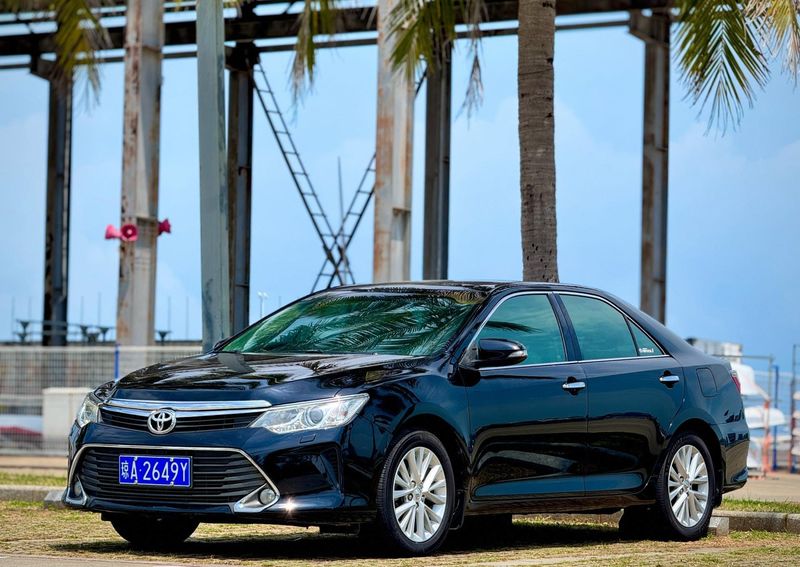
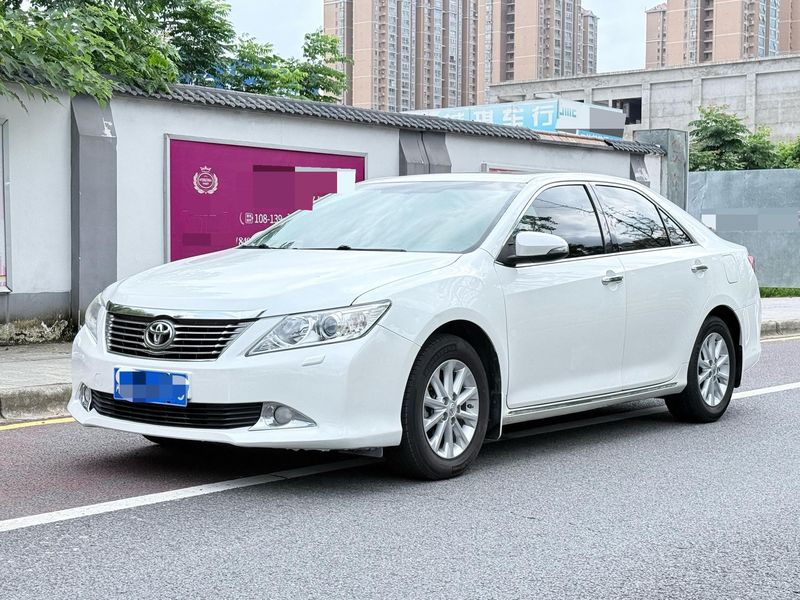
A 2014 Toyota Camry 2.5L automatic with 70,000–100,000 km on the odometer typically costs $9,000–$12,000 FOB for export to Nairobi, Kenya. That price range reflects a well-maintained unit with a verified automatic gearbox and no significant engine oil leaks. Final landed cost in Nairobi will be higher once ocean freight to Mombasa, port charges, and Kenyan import duties are added. For current stock photos, specifications, and a firm quote, WhatsApp +86 155 5692 0288. We are a direct exporter, not agency, not aggregator — you deal with the source, not a middleman.
What factors determine the price of a 2014 Camry for Nairobi?
Two identical-looking 2014 Camrys can differ by $2,000 or more in FOB price. The variables that matter most for the Nairobi market are mileage, transmission condition, service history, trim level, and cosmetic grade.
- Mileage: A 2014 Camry with 70,000 km sits at the top of the price band ($11,000–$12,000 FOB). One at 100,000 km or slightly above usually lands at $9,000–$10,000. Beyond 130,000 km, buyers should expect closer to $8,000–$9,000, but availability of clean units drops sharply.
- Automatic gearbox condition: The 6-speed automatic in the 2014 Camry (2.5L 2AR-FE engine) is durable, but neglected fluid changes cause shuddering and delayed engagement. We test each unit for shift quality, torque converter lockup, and any stored transmission codes before listing. A rebuilt or questionable gearbox can knock $800–$1,500 off the value.
- Engine oil leaks: The 2AR-FE is known for timing cover seepage and valve cover gasket leaks after 80,000 km. A dry engine commands a premium; visible leaks mean either a price reduction or a repair before shipment. We verify both and disclose findings.
- Trim and options: LE, SE, and XLE trims carry different values. SE with sport suspension and 18-inch wheels typically adds $300–$600. Leather, sunroof, and navigation add value only if the Kenyan buyer specifically wants them.
- Accident history and body grade: Auction grade (3.5, 4, 4.5) and structural integrity matter. A grade 4 car with clean panels is worth $500–$1,000 more than a repaired grade 3.5 unit.
- Service records: Japanese market cars with documented oil changes every 5,000–7,000 km are easier to price at the top of the range.
Because we buy directly from Japanese auctions and dealer networks, we can show you the auction sheet, mileage verification, and inspection photos before you commit. That transparency is why buyers in Nairobi, Mombasa, and Kisumu keep coming back.
What are the shipping and tax costs to Mombasa and Nairobi?
The FOB price covers the vehicle loaded at the export port (usually Yokohama or Nagoya). It does not include ocean freight, insurance, or Kenyan taxes. Here is how the numbers stack up for a 2014 Camry headed to Nairobi via Mombasa.
- Ocean freight to Mombasa: $900–$1,400 for a 20-foot container or RoRo, depending on carrier, season, and whether you share a container. RoRo is often cheaper for a single unit; container shipping is safer for the paint and interior.
- Marine insurance: Roughly 0.5%–1% of CIF value, so $60–$120 for a $10,000 car.
- Kenyan import duty: Kenya Revenue Authority calculates duty on CIF (Cost, Insurance, Freight) plus an Import Declaration Fee (IDF) of 3.5% and Railway Development Levy (RDL) of 2%. For used cars, excise duty is based on engine capacity — for a 2.5L petrol engine, expect 30% excise on CIF. Import duty itself is 25% of CIF. VAT is 16% on the duty-inclusive value. In practice, total taxes for a 2014 Camry 2.5L often land between $4,500 and $6,500, depending on the assessed CIF value.
- Port and clearing charges: Mombasa port storage, shipping line release, clearing agent fees, and transport to Nairobi typically add $500–$900.
- KEBS inspection: Kenya Bureau of Standards pre-export verification of conformity (QISJ or similar) is required. Budget $150–$250 if not already included.
So a $10,000 FOB Camry can become a $16,000–$18,000 landed vehicle in Nairobi. We provide a written cost breakdown with every quote so there are no surprises. If you want the exact figure for a specific unit, WhatsApp +86 155 5692 0288 with the stock number.
How do I order and pay for a 2014 Camry export?
The process is straightforward when you work with a direct exporter. Here is the typical flow:
- Step 1 — Enquiry and stock selection: Send your budget, preferred mileage, and trim to our WhatsApp. We reply with available units, auction sheets, and real photos. No stock photos, no bait-and-switch.
- Step 2 — Inspection and verification: Before you pay, we run a cold-start test, check the automatic transmission through all gears, inspect for engine oil leaks, verify the odometer, and photograph the undercarriage. You receive a condition report.
- Step 3 — Proforma invoice: We issue a proforma invoice showing FOB price, freight estimate, and payment terms. This document is what you use for your bank transfer and for Kenyan pre-import approvals.
- Step 4 — Deposit: A 30% deposit secures the vehicle. The balance is due before shipment or against the Bill of Lading, depending on the agreement. We accept T/T bank transfer. For repeat buyers, we can discuss LC terms.
- Step 5 — Shipping and documents: We book the vessel, handle export customs, and send you the Bill of Lading, commercial invoice, packing list, and certificate of origin. These are the documents your clearing agent in Mombasa needs.
- Step 6 — Arrival and clearing: Your agent clears the car at Mombasa, pays KRA duties, and arranges transport to Nairobi. We can recommend trusted clearing agents if you do not have one.
Because we are a direct exporter, not agency, not aggregator, there is no layer of commission between you and the source. That keeps the FOB price honest and the communication fast.
What should I check in the inspection and paperwork?
For a 2014 Camry going to Nairobi, the inspection and documents are where deals are won or lost. Insist on the following:
- Automatic transmission: Test from cold. Look for delayed engagement, slipping between 2nd and 3rd, and torque converter shudder at 40–60 km/h. Scan for pending codes even if the check engine light is off.
- Engine oil leaks: Check the timing cover, valve cover, oil pan, and rear main seal. A small seep is manageable; active drips mean repair before shipment.
- Cooling system: The 2AR-FE water pump and radiator hoses are common wear items at this age. Verify no coolant residue or overheating history.
- Suspension and brakes: Nairobi roads are unforgiving. Worn struts, bushings, and brake pads should be noted so you can budget for replacement.
- Odometer verification: Auction sheets and export certificates should match the dashboard reading. Tampering is rare on Japanese domestic market cars but always verify.
- Documents: You need the Bill of Lading, commercial invoice, packing list, certificate of origin, and the export certificate (Japanese deregistration). For Kenya, also ensure the QISJ/KEBS conformity certificate is issued before shipment.
- Chassis number: Confirm the chassis number on the car matches the auction sheet, invoice, and Bill of Lading. Any mismatch will delay clearing at Mombasa.
We photograph and document each of these points and send the file to you before the vehicle leaves the port. If a unit does not meet our standard, we do not list it.
Why buy from a direct exporter instead of a local dealer in Nairobi?
Local dealers in Nairobi add margin for floor space, staff, and financing. When you import directly, you capture that margin yourself. The trade-off is that you handle clearing and duties, but we guide you through every step and provide the documents your agent needs. For buyers who import regularly, the savings on a single 2014 Camry can be $1,500–$3,000 compared to buying the same car already landed in Nairobi.
We specialize in Toyota sedans and SUVs for East Africa. Every 2014 Camry we export is selected for the Kenyan market: automatic transmission, 2.5L petrol, and a body that can handle the climate and roads. If you need a different year, trim, or budget, tell us and we will source it.
Ready to move? WhatsApp +86 155 5692 0288 with your target budget and mileage, and we will send you current photos, auction sheets, and a full FOB-to-Nairobi cost breakdown. You can also browse in-stock How listings to see what is available right now. As a direct exporter, not agency, not aggregator, we keep the process simple, the pricing transparent, and the cars honest.