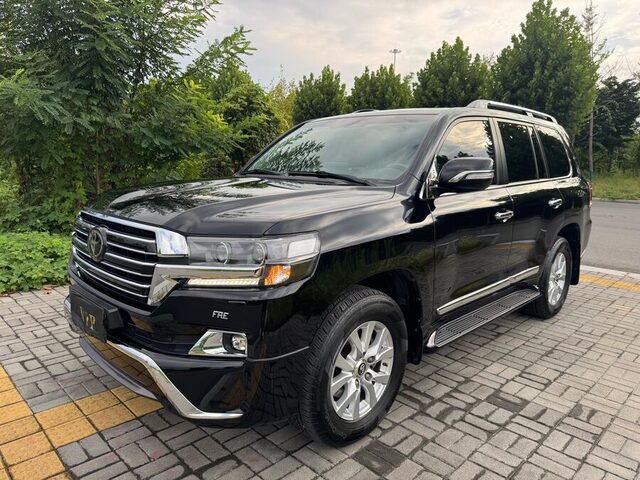
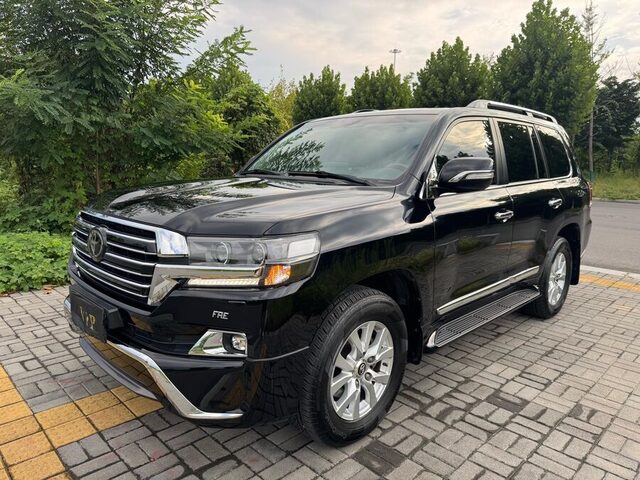
Why mileage verification matters more than the odometer reading
When importing a used Toyota from Japan or China, the odometer number is the single biggest factor in price—and the most commonly manipulated figure. A 2019 Corolla with 60,000 km is worth roughly 15–20% more than the same car showing 120,000 km. But in cross-border deals, you cannot rely on the dashboard alone. Tampering is easy: a $20 OBD-II tool can rewrite the cluster in under five minutes. Here is how to verify real mileage before you commit.
Step 1: Get the auction sheet or export certificate—and check for asterisks
If the car comes from a Japanese auction (e.g., USS or TAA), ask for the original auction sheet. Look at the “mileage” field. Japanese auction houses grade mileage as “actual” or “unknown”. If the sheet says “not verifiable” or has a star (*) next to the odometer, treat it as suspect. For Chinese-sourced exports, request the customs export declaration (报关单) and the vehicle inspection report (检测报告). Both should list the odometer reading at the time of export. Compare those numbers with the current dashboard. A difference of more than 1,000 km means someone has driven it after export—or the document is fake.
Step 2: Cross-check with service history and maintenance records
Real Toyotas have a paper trail. Ask for the last three service invoices, ideally from a Toyota dealership (Japan: トヨタ正規ディーラー; China: 4S店). Each invoice shows the odometer at service date. A healthy car is serviced every 5,000–10,000 km. If the service records show 80,000 km at 2022, but the auction sheet says 55,000 km at 2023, you have a red flag. For cars under 10 years old, you can also request the Japan Automobile Inspection Association (JAAI) or China's VIN-based maintenance database query. Some exporters will do this for free—if they refuse, walk away.
Step 3: Use the VIN to pull a telematics or insurance history report
For Toyotas made after 2012, many models have embedded telematics (e.g., G-Book in Japan, Toyota Connected in China). If the exporter can provide a screenshot from the owner's app showing last odometer update, that is gold. Alternatively, purchase a third-party history report: in Japan, “Carrozzeria” or “Goo-net” reports cost about ¥2,000–3,000 (USD 15–20) and list odometer readings from annual inspections (車検). In China, use “查博士” or “蚂蚁查车”—about RMB 30–60 per VIN. These reports pull from insurance claims and mandatory inspections. Discrepancies above 3% (e.g., 6,000 km on a 200,000 km car) are a strong sign of rollback.
Step 4: Physically inspect wear indicators that cannot be easily faked
If you have a local agent or can visit the car before shipping, check these four items:
- Brake pedal rubber: A car with under 50,000 km should show minimal wear on the pedal pad. Over 100,000 km, the rubber is often smooth or replaced—look for a mismatched new pad.
- Driver's seat bolster: On a Corolla or Camry with 40,000 km, the left side of the driver's seat should be firm with only light creasing. Heavy cracking or flattening at 60,000 km is a lie.
- Steering wheel leather: Check the 9 and 3 o'clock positions. Real wear at those points corresponds to roughly 15,000 km per 0.5mm of shine. A shiny wheel with a 30,000 km claim is suspicious.
- Tires and brake discs: Original tires last 40,000–50,000 km. If the car claims 30,000 km but has new tires, ask why. Measure brake disc lip: a 1.0–1.5mm ridge means 60,000+ km; a 2mm+ ridge means 100,000+ km.
Step 5: Run a compression test and check engine idle hours
This is the most technical but decisive step. A diesel Toyota (e.g., Land Cruiser Prado) should have compression within 10% across all cylinders. If you see 20% variance, the engine has high wear—usually beyond 150,000 km regardless of odometer. For petrol models, use an OBD-II scanner to read “engine hours” (if supported). Average speed in city driving is 30–40 km/h. Multiply engine hours by 35 km/h: e.g., 2,000 hours × 35 = 70,000 km. If the odometer shows 45,000 km but engine hours imply 70,000, the cluster was rolled back.
What to do if you find a discrepancy
Do not negotiate with a seller who shows tampering. Even a 10% discount is not worth the future resale loss and legal liability in your home country. Instead, request a different vehicle or ask for a written “no rollback” clause in the sales contract with a penalty of 30% of the vehicle price. Most honest exporters will agree—the dishonest ones will not.
If you want a reliable used Toyota with verified mileage from Japan or China, we handle all documentation checks and can provide the auction sheet, service history, and a third-party mileage report before you pay. Message us on WhatsApp at +86 155 5692 0288 for a free quote and a list of currently inspected units.